Education Hub
When to Get an STI Test
When to get STI test — how soon after sex, how often to test, window periods, and when to retest. Plain English guide by a Specialist GP.
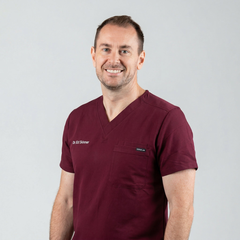
Dr Ed Skinner · Specialist GP
AHPRA MED0001674680 · Last reviewed: April 2026
The short answer: if you are sexually active and have not been tested recently, now is a good time. Most STIs have no symptoms, so you cannot rely on how you feel. A full STI screen costs $39, takes 10 minutes at any pathology clinic, and covers the five most important infections. No appointment needed.
How soon after sex should I get tested?
Every STI has a different detection window
There is no single answer because different infections take different amounts of time to show up on a test. Testing too early can give you a false negative — meaning the test says you are clear when you are actually infected. Here is a practical guide:
If you had unprotected sex less than 72 hours ago and are worried about HIV, the most important step is to call our 24/7 on-call doctor immediately. Emergency PEP can prevent HIV infection if started within 72 hours of exposure. Do not wait to test — start PEP now and test later.
If the exposure was more than 2 weeks ago, you can test now for chlamydia and gonorrhoea. For the most complete picture, wait 4 weeks and do a full screen which will also reliably detect syphilis and early HIV.
If you have symptoms right now (discharge, sores, pain, itching), test immediately regardless of timing. Some infections can be detected earlier when symptoms are present, and your GP needs to assess what is happening. Book a $59 telehealth consult for symptoms.
STI Window Periods — When Can Each Infection Be Detected?
| Infection |
Earliest Detection |
Recommended Test Time |
Conclusive At |
Test Type |
| Chlamydia | 2 weeks | 2 weeks after exposure | 2 weeks | Urine / swab (PCR) |
| Gonorrhoea | 2 weeks | 2 weeks after exposure | 2 weeks | Urine / swab (PCR) |
| Syphilis | 2–4 weeks | 4 weeks after exposure | 12 weeks | Blood test (serology) |
| HIV | 2 weeks (4th gen) | 4–6 weeks | 12 weeks | Blood test (4th gen Ag/Ab) |
| Hepatitis B | 3–6 weeks | 6 weeks | 12 weeks | Blood test (serology) |
| Hepatitis C | 2–6 weeks | 6 weeks | 12 weeks | Blood test (serology) |
| Herpes (HSV) | During outbreak | Swab active sore ASAP | During symptoms | Swab of active sore (PCR) |
| Mgen | 2 weeks | 2–4 weeks | 4 weeks | Urine / swab (PCR) |
| Trich | 1–4 weeks | 2 weeks | 4 weeks | Swab (PCR) |
Practical advice: If you want one visit that covers everything, test at 4 weeks after exposure. This gives reliable results for chlamydia, gonorrhoea, syphilis, and early HIV. If your 4-week results are negative but you had a high-risk exposure, retest at 12 weeks for conclusive syphilis, HIV, and hepatitis results.
How often should I get tested?
Based on the
Minimum — Every 12 months
If you are sexually active and have had any new partner in the past year. This is the bare minimum recommended by Australian guidelines. Even if you always use condoms.
Recommended — Every 3–6 months
If you have multiple partners, casual sex, or use dating apps. Also recommended if you have had an STI in the past 12 months (reinfection is common).
Every 3 months — MSM
Men who have sex with men should test every 3 months. This includes chlamydia and gonorrhoea at all exposure sites (throat, urine, rectal) plus syphilis, HIV, and hepatitis blood tests. On PrEP? Testing every 3 months is built into your monitoring.
Test now — After any risk event
Condom broke, unprotected sex with a new or casual partner, partner told you they have an STI, sexual assault. Do not wait for your next routine screen — test as soon as the window period allows. HIV exposure? Emergency PEP within 72 hours.
New relationship? When to test
The conversation nobody wants to have — but should
Starting a new relationship is one of the most important times to get tested. Both partners should get a full screen before stopping condom use. Here is a practical timeline:
Step 1 — Both partners test. Get a full 5-infection STI screen ($39) each. Make sure it has been at least 4 weeks since your last sexual contact with someone else, so the window periods have passed.
Step 2 — Wait for results. Results come by SMS within 24 hours. If both partners are negative for everything, you can make an informed decision about condom use together.
Step 3 — If anything is positive. Your Specialist GP will call you to arrange treatment. Most STIs are easily curable. Treat first, retest to confirm clearance, then proceed. It is not a big deal — it happens all the time.
Step 4 — Ongoing. If the relationship is exclusive, no further routine screening is needed unless the situation changes. If either partner has other sexual contacts, continue screening per the guidelines above.
Having this conversation early is a sign of maturity and respect, not suspicion. A $39 test takes 10 minutes and gives both partners peace of mind.
High-risk exposure — What to do right now
Condom broke, unprotected sex, or partner has an STI
Within 72 hours of possible HIV exposure
Emergency PEP can prevent HIV if started within 72 hours. This is time-critical. Call our 24/7 on-call doctor now — available evenings, weekends, and public holidays.
After a condom break or unprotected sex
Consider DoxyPEP (within 72 hours) to significantly reduce chlamydia and syphilis risk. Consider emergency contraception if pregnancy is a concern. Test at 2 weeks for chlamydia and gonorrhoea, 4 weeks for the full screen.
Partner told you they have an STI
Get tested and treated as soon as possible, even if you have no symptoms. If your partner has chlamydia or gonorrhoea, you can book a $59 telehealth consult — your GP may prescribe treatment immediately based on your partner's diagnosis, before your own results come back.
I have no symptoms — do I still need to test?
Yes. Here is why
Most STIs cause no symptoms at all. You cannot tell whether you are infected based on how you feel. Here is the reality:
80%
of people with herpes do not know they have it
Untreated STIs can cause serious complications including infertility, pelvic inflammatory disease, ectopic pregnancy, chronic pain, and increased HIV risk. Early detection and treatment prevents all of these.
Bottom line: If you are sexually active and have not been tested in the past 12 months, book a $39 screen now. It takes 10 minutes, costs less than a coffee and lunch, and could save your fertility.
Not sure what you have? Compare symptoms side by side in our
STI Comparison Guide — thrush vs BV, herpes vs warts, and more.


 1300 222 365
 Where Are My Results?
 Contact Us
 Our Story
 Book Online
 Find Pathology Centre
 Sperm Collection Centres
 STI Comparison Guide
 STI Swab Collection Guide
 CST Self-Collection Guide