Can you do home cervical screening if you’re pregnant or on your period?
Two of the most common reasons people put off their at-home self-collect test — being pregnant, or being mid-cycle. Here’s the reassuring news on both, plus everything else you need to qualify for home cervical screening.

The short answer to the question most people are really asking: yes — in most cases you can do an at-home cervical screening (self-collect) test while you’re pregnant, and yes, you can do it while you’re on your period too. Neither one rules you out. There are a couple of sensible caveats worth knowing, and a short list of requirements that decide whether self-collection is right for you, so let’s walk through all of it.
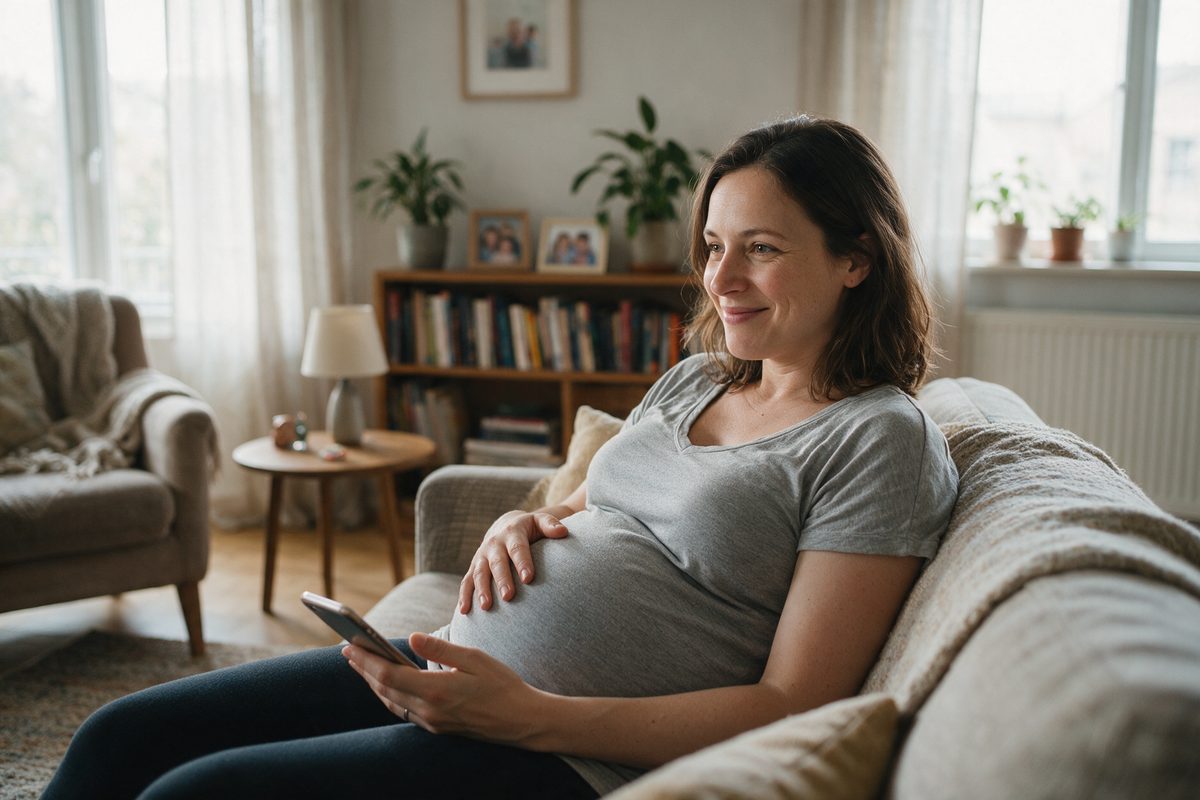
Can you do it while you’re pregnant?
In most cases, yes. It is safe to have cervical screening as part of routine pregnancy care, and both a self-collected sample and a clinician-collected one can be safely done while you’re pregnant. The self-collect test is a gentle vaginal swab you take yourself — it doesn’t go near the baby and doesn’t carry a risk to your pregnancy.
If you’re pregnant and already due or overdue for screening, it’s generally better to sort it than to defer everything until after the birth — those first months with a newborn have a way of swallowing good intentions. Reviewing your screening history is a normal part of pregnancy and postnatal care, and a test can be done at any point along the way.
The one thing to flag: if you have any unusual bleeding during pregnancy, that always needs to be assessed by your treating doctor or midwife in its own right — it isn’t something a screening test is designed for. And if HPV happens to be found on your sample, your Specialist GP will talk you through the timing of any follow-up; some checks are done safely during pregnancy and others are simply scheduled for after your baby arrives. Mention your pregnancy when you book so we can make sure it’s the right time and the right test for you.
Can you do it while you’re on your period?
Yes. You can take a self-collection sample at any point in your cycle, so being on your period doesn’t rule you out and you don’t need to wait for it to finish. Because the test looks for HPV (a virus) rather than reading individual cells, a normal period generally won’t change the result.
The only caveat is very heavy bleeding, which can occasionally interfere with the sample. So if you happen to be on your heaviest day or two, many people find it easier — and a bit more comfortable — to wait for lighter flow. Light or moderate bleeding is completely fine. If you’re not sure, just pick a lighter day in your cycle and go ahead.

Who can use home cervical screening? (the requirements)
Self-collection isn’t a separate test — it’s the standard Cervical Screening Test, just with a sample you take yourself instead of a clinician using a speculum. To be eligible for it you need to tick a short, straightforward list:
- You have a cervix and are aged 25 to 74. Routine screening starts at 25 and continues to 74, whether you’re a woman, or a trans or non-binary person with a cervix.
- You’ve ever been sexually active. This includes any kind of sexual contact, with a partner of any gender — HPV is extremely common and passed through skin-to-skin genital contact.
- You’re due or overdue. Screening is every five years if your result is normal. If you’ve never screened, or you’re years overdue, you’re still very much eligible — and especially encouraged.
- You have no symptoms. Self-collection is for people who feel well. Symptoms are handled differently (see the next section).
Since July 2022, self-collection has been available to everyone eligible for routine screening, not just a limited group, so choosing to do it yourself is a standard option rather than an exception. You can read more on who can use self-collection, and on how accurate it is compared with a clinician-collected sample. You don’t buy the kit off a pharmacy shelf — because it’s a Medicare-funded screening test, a Specialist GP confirms you’re eligible and a kit is posted to your door.
When self-collection isn’t the right option
For a small number of situations, a clinician-collected sample (and sometimes an examination) is recommended instead of self-collection. It’s worth knowing these so you can flag them when you book:
- You have symptoms. Unusual or unexpected bleeding — after sex, between periods, or after menopause — persistent unusual discharge, or pelvic pain all need a clinician assessment with an examination of the cervix, not a screening test. This is about getting you the right care, faster.
- Your self-collect test finds HPV. A self-collected sample checks for HPV. If HPV is found, the next step is usually a clinician-collected sample (or a referral) to look at the cells of the cervix — your Specialist GP arranges this and explains what it means. A positive result is common and rarely means cancer.
- Certain follow-up situations. People being monitored after treatment for some specific conditions — such as previously treated adenocarcinoma-in-situ — or anyone exposed to the medication DES before birth, are advised to have a clinician-collected test.
Other common eligibility questions
A few more situations that often make people wonder whether they still qualify — and in nearly every case, the answer is that you do:
- You’ve had the HPV vaccine. You still need routine screening. The vaccine prevents most, but not all, of the HPV types that cause cervical cancer, so screening stays important even if you’re fully vaccinated.
- You’re no longer sexually active, or only ever had one partner. You’re still due. HPV can stay dormant for many years, so past exposure is what matters, not your current situation.
- You’ve been through menopause. Screening continues to age 74.
- You’re LGBTIQ+. Anyone with a cervix needs screening regardless of sexual orientation or the gender of past partners.
- You’re under 25. Routine screening isn’t recommended before 25 — but if you have symptoms at any age, see a doctor rather than waiting.
Common questions
Can I do a home cervical screening self-collect test if I’m pregnant?
In most cases, yes. Cervical screening is safe as part of routine pregnancy care, and both a self-collected sample and a clinician-collected one can be safely done while you’re pregnant. If you’re due or overdue, it’s worth sorting early rather than waiting until after the birth. Mention your pregnancy when you book so your Specialist GP can confirm it’s the right time for you.
Can I do cervical screening while I’m on my period?
Yes. You can take a self-collection sample at any point in your cycle, so a normal period doesn’t rule you out. The main thing to know is that very heavy bleeding can occasionally interfere with the result, so if you’re on your heaviest days many people find it easier and more comfortable to wait a day or two for lighter flow.
Do I have to wait until my period finishes before testing?
No, you don’t have to wait for it to finish. Light or moderate bleeding is fine. Only very heavy bleeding is worth timing around, because it can occasionally affect the sample. If in doubt, choose a lighter day.
Who is eligible for home cervical screening self-collection?
People with a cervix aged 25 to 74 who have ever been sexually active, are due or overdue for routine screening, and have no symptoms. Since July 2022 self-collection has been an option for everyone eligible for routine screening. It’s a vaginal swab you take yourself, and screening is every five years if your result is normal.
I’ve had the HPV vaccine. Do I still need cervical screening?
Yes. The HPV vaccine protects against the HPV types that cause most cervical cancer, but not all of them, so everyone with a cervix aged 25 to 74 still needs routine screening even if they’re fully vaccinated.
I feel completely well and have no symptoms. Do I still need it?
Yes, and that’s exactly who screening is for. Cervical screening is designed to find HPV in people with no symptoms at all, long before any problem would be noticeable. If you do have symptoms such as bleeding after sex or between periods, that needs a clinician assessment rather than a screening test.
References & sources
- Department of Health, Disability and Ageing — Frequently asked questions about the Cervical Screening Test self-collect option (2025). www.health.gov.au/resources/collections/self-collection-for-the-cervical-screening-test
- Australian Centre for the Prevention of Cervical Cancer (ACPCC) — Cervical Screening Self-Collection (eligibility and exclusions). acpcc.org.au/practitioners/self-collection
- Cancer Institute NSW — Cervical screening during pregnancy. www.cancer.nsw.gov.au/prevention-and-screening/screening-and-early-detection/cervical-screening
- Pregnancy, Birth & Baby (Healthdirect Australia) — Cervical screening during pregnancy. www.pregnancybirthbaby.org.au/cervical-screening-during-pregnancy
- Department of Health, Disability and Ageing — National Cervical Screening Program: self-collection. www.health.gov.au/our-work/national-cervical-screening-program
This article is general information only and is not a substitute for personal medical advice. Written and clinically reviewed by Dr Edward (Ed) Skinner (MBBS, FRACGP; AHPRA MED0001674680) and last reviewed on 10 October 2026.