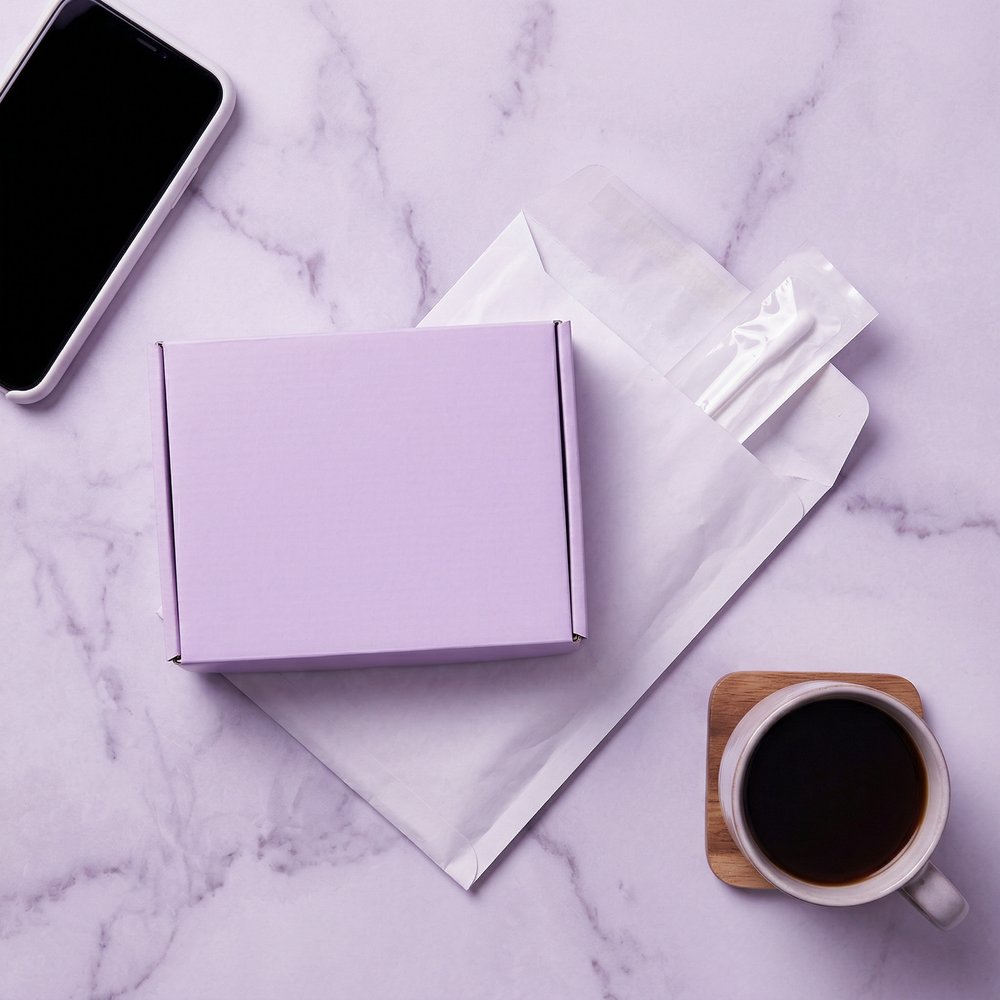
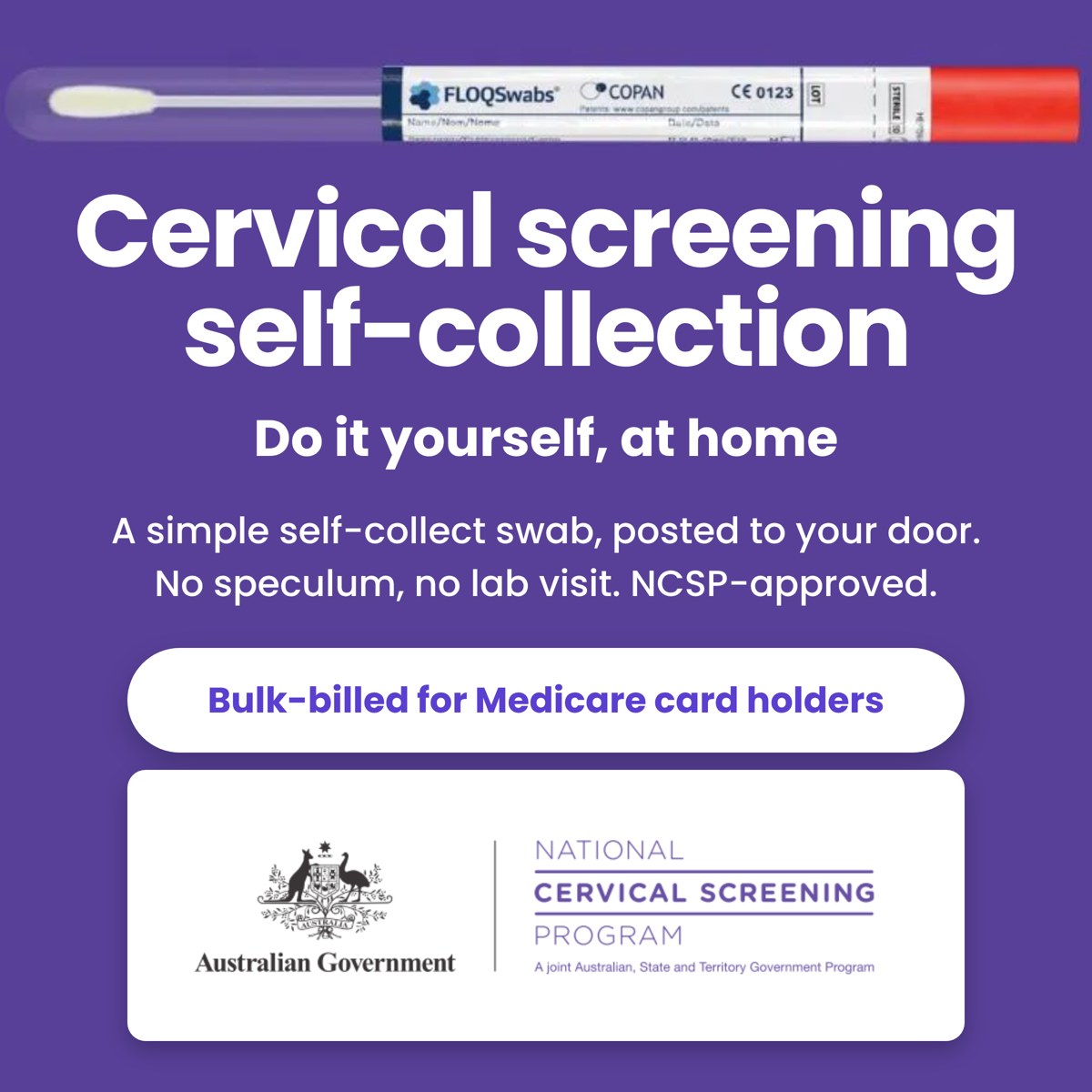
Cervical screening at home — no speculum, no clinic visit, no pathology lab. The Cervical Screening Test replaced the Pap smear in 2017, and you can now do it yourself. A discreet kit is posted to your door. Self-collect your own sample at home — a self pap smear you do yourself, no clinician needed — then post it back in the included reply-paid envelope. It’s the cervical cancer screening test (an HPV test), done in private.
A Specialist GP checks you’re due and eligible to self-collect.
📞 “Hi, it’s Clinic365!”
2
Kit posted to your door
Collect your own sample at home — no speculum, no examination.
📦 Free postage both ways
3
Results by SMS
Usually within about 7 days. If follow-up is needed, a GP calls you.
✅ “Your results are ready”
🧬 Overview
What Is CST Self-Collection?
The Cervical Screening Test (CST) is the routine test that checks for human papillomavirus (HPV), the virus that causes almost all cervical cancer. Self-collection means you collect your own sample with a simple swab, rather than having a clinician do it during a speculum examination. It’s the same screening test — it just gives you the option to take the sample yourself, in private.
With home-based CST self-collect via telehealth, you don’t even need to visit a clinic. After a short telehealth consultation to confirm you’re eligible, a self-collection kit is mailed to your home. You take the sample yourself following the simple instructions, then post it back to the laboratory in the prepaid envelope provided. It’s private, convenient, and available to anyone due for cervical screening who would prefer to screen at home.
Is it as accurate as a clinician-collected test?
Yes. For detecting HPV, a self-collected vaginal sample is just as accurate as one taken by a clinician. This is why self-collection is a fully approved option under Australia’s National Cervical Screening Program, not a second-best alternative. The laboratory runs exactly the same HPV test on your sample either way. The only practical difference is that if HPV is found, some situations may need a follow-up sample — more on that below — but for the screening test itself, self-collection is reliable and validated.
Who is eligible?
Cervical screening is recommended for people with a cervix aged 25 to 74 who have ever been sexually active, usually once every five years. Since 2022, self-collection has been available to everyone eligible for routine screening, so you can choose it simply because you prefer it — you don’t need a special reason. It’s especially valued by people who find speculum examinations uncomfortable, who have experienced trauma, who face cultural barriers, or who simply can’t easily get to a clinic.
Self-collection is for routine screening when you have no symptoms. If you have symptoms such as unusual bleeding (including bleeding after sex or between periods), unusual discharge or pelvic pain, you need a clinician assessment rather than a self-collected screening test. Let the Specialist GP know during your consult so you get the right care.
📋 Pap smear
Is the At-Home Kit a Pap Smear?
Not exactly — and the difference is good news. A traditional Pap smear (or Pap test) needed a clinician to take cells from your cervix with a speculum. The at-home cervical screening kit is the modern replacement: you self-collect a simple vaginal swab, which is tested for HPV — the virus that causes almost all cervical cancer. People still search for it as an at-home Pap smear kit, DIY Pap test or self smear kit, and this is what they mean: a self-collected Cervical Screening Test, posted to your door and done in private. It replaced the Pap smear across Australia in 2017. Read more: cervical screening vs the Pap smear →
⚙️ How It Works
How At-Home Self-Collection Works
The home-based pathway is designed to be simple from start to finish. Here’s what happens:
1
Telehealth consult
A Specialist GP confirms you’re eligible, explains the process, and requests your kit to your preferred address.
2
Kit posted, self-collect
A kit with a swab, instructions and a prepaid return envelope arrives by post (usually 7–14 days). Self-collect at home, no speculum, then post it back.
3
Results & follow-up
About 7 days after the lab receives your sample. Normal results come by SMS; if HPV is found, a Specialist GP calls to talk it through.
What’s in the kit
The kit that arrives in the post contains everything you need to take and return your sample:
A single self-collection swab.
A sample tube to seal the swab in after collection.
A biohazard bag for safe transport.
A pathology request form already completed by your clinician, with a place for you to sign and record your collection date.
A prepaid Express Post envelope addressed to the laboratory.
A clear, illustrated instruction sheet covering collection, packaging and posting.
Everything is included, so there’s nothing you need to buy or organise yourself. If anything is unclear, the team can talk you through it during your telehealth consult.
🧪 Sampling
Taking and Returning Your Sample
Taking the sample is quick and straightforward, and most people find it easy. In brief, you insert the swab a few centimetres into the vagina and rotate it for around 20 to 30 seconds, then place it into the tube provided — no speculum and no clinician required. The kit includes step-by-step instructions with diagrams, and these are the instructions to follow, as swab types can vary slightly.
Important: write the date you took the sample on both the sample tube and the request form, and sign where indicated. The date of collection matters, because the laboratory must receive your sample within 28 days of the date you took it. Posting it back promptly avoids the sample expiring and having to be repeated.
Returning your sample
Once you’ve collected and sealed your sample, place it in the biohazard bag with the completed request form, seal it in the prepaid Express Post envelope, and post it back as soon as you can. The prepaid postage means there’s nothing to arrange. Because the lab must receive the sample within 28 days of collection, it’s best to post it the same day or the next day. If for any reason you can’t return it in time, contact the clinic — a fresh kit can be arranged.
📱 Results
Your Results and What Happens Next
Once the laboratory receives your sample, results take approximately 7 days. If your result is normal — no HPV detected, which is the case for most people — we send it to you by SMS, and you’re at very low risk and can simply return for routine screening in five years. If HPV is detected, a Specialist GP calls you to go through the result over the phone and explain what happens next. A positive HPV result doesn’t mean you have cancer — it means closer follow-up is worthwhile.
Depending on which type of HPV is found, next steps differ. Some higher-risk types lead to a referral for a closer look at the cervix (colposcopy). For other HPV types, a follow-up sample taken by a clinician may be needed, because that additional test (cytology) can’t be done on a self-collected sample. Your clinician will explain exactly what your result means and organise any follow-up, so you’re never left wondering.
✅ Benefits
Why Choose Home Self-Collection
Home-based CST self-collection removes many of the barriers that stop people from screening. It’s private — you take the sample yourself, in your own space, with no examination. It’s convenient — the kit comes to you and posts back at no cost to you, with the whole process starting from a telehealth consult you can do from home. And it’s inclusive, giving a comfortable option to people who have found clinic-based screening difficult in the past. Most importantly, it means more people stay up to date with screening, which is one of the most effective ways to prevent cervical cancer.
Getting started
Getting your at-home CST self-collect kit is simple: book a short telehealth consult, confirm you’re eligible, and the clinic arranges for a kit to be mailed to your preferred address. From there you take the sample, post it back, and receive your results. If you’d also like STI testing, that can be arranged separately — the STI test covers the common infections, and you can ask a Specialist GP to include it when you book.
Ready when you are. A Specialist GP can arrange everything by phone, with your referral sent straight to your phone by SMS.
CST self-collection lets you take your own sample for the Cervical Screening Test, using a simple swab instead of having a clinician do it with a speculum. The sample is tested for HPV, the virus that causes almost all cervical cancer. It’s the same approved screening test — you just collect it yourself, in private, including at home.
Is this the same as a Pap smear?
It’s the modern replacement for it. In December 2017 the Pap smear (Pap test) was replaced by the Cervical Screening Test (CST) across Australia. The CST checks for HPV — the virus that causes almost all cervical cancer — which picks up risk earlier than the old Pap smear did. With self-collection you take the sample yourself, in private, including at home — sometimes called an at-home or DIY Pap smear kit.
Can I do my own Pap smear at home?
Yes — that’s what self-collection is. Instead of a clinician taking the sample, you collect your own with a simple vaginal swab at home, then post it back reply-paid. It’s often searched as a self pap smear, pap smear self-test or DIY pap smear, and it’s the same NCSP-approved Cervical Screening Test (an HPV test that screens for cervical cancer) either way.
Can I buy an at-home Pap smear kit at a chemist or pharmacy?
Cervical screening isn’t sold over the counter at pharmacies such as Chemist Warehouse. Because it’s a Medicare-funded screening test, a Specialist GP confirms your eligibility and requests an NCSP-approved kit, which is posted to your door — for eligible patients, rather than a product you buy off the shelf.
Can I do cervical screening at home?
Yes. With home-based self-collection via telehealth, a kit is mailed to you after a short online consult. You take the sample yourself at home following the instructions, then post it back to the lab in a prepaid envelope. It’s a fully approved way to complete your Cervical Screening Test without visiting a clinic.
How does at-home self-collection via telehealth work?
You book a telehealth consult, a Specialist GP confirms you’re eligible and requests a kit to your address, and the lab mails it to you. You collect the sample at home, record the collection date, and post it back in the prepaid envelope. Normal results are sent by SMS, and if HPV is found a Specialist GP calls you to go through it.
How and when will I get my results?
The kit usually arrives by post within 7–14 days of your consult. Once you’ve posted your sample back and the laboratory receives it, results take approximately 7 days. If your result is normal it’s sent to you by SMS; if HPV is detected, a Specialist GP calls you to go through the result over the phone and explain the next steps.
What’s in the self-collection kit?
Your at-home cervical screening kit includes a self-collection swab, a sample tube, a biohazard bag, a pre-completed pathology request form to sign and date, a reply-paid Express Post return envelope, and illustrated instructions. Everything you need is included, so there’s nothing to buy or organise yourself.
How do I take the sample?
You insert the swab a few centimetres into the vagina, rotate it for around 20 to 30 seconds, then place it in the tube provided — no speculum needed. The kit includes step-by-step instructions with diagrams, which you should follow, as swab types vary. Remember to record your collection date on the tube and form.
Is self-collection as accurate as a doctor doing it?
Yes. For detecting HPV, a self-collected sample is just as accurate as a clinician-collected one, which is why it’s an approved option under the National Cervical Screening Program. The lab runs the same HPV test either way. If HPV is found, some situations may need a follow-up clinician sample, but the screening test itself is reliable.
Am I eligible for self-collection?
Cervical screening is for people with a cervix aged 25 to 74 who have ever been sexually active, usually every five years. Since 2022, self-collection is available to everyone eligible for routine screening. It suits anyone who prefers to avoid a speculum exam or can’t easily attend a clinic. A Specialist GP confirms your eligibility during the consult.
How long do I have to return the sample?
The laboratory must receive your sample within 28 days of the date you collected it, so it’s best to post it back the same or next day. That’s why recording the collection date on the tube and form matters. If you can’t return it in time, contact the clinic and a fresh kit can be arranged.
What happens if HPV is detected?
If HPV is detected, a Specialist GP calls you to go through the result over the phone. A positive HPV result doesn’t mean cancer — it means closer follow-up is worthwhile. Depending on the HPV type, you may be referred for a closer look at the cervix (colposcopy), or asked for a follow-up sample taken by a clinician, since that additional test can’t be done on a self-collected sample.
Does self-collection test for other STIs?
No. Cervical screening self-collection tests only for HPV as part of cervical cancer screening. It does not check for other sexually transmitted infections such as chlamydia or gonorrhoea. If you’d also like STI testing, that can be arranged separately — ask the clinic to include it when you book.
Can I do self-collection if I have symptoms?
No. Self-collection is for routine screening when you have no symptoms. If you have symptoms such as unusual bleeding, bleeding after sex, unusual discharge or pelvic pain, you need a clinician assessment rather than a self-collected screening test. Mention any symptoms during your consult so you’re directed to the right care.
How do I get a self-collection kit sent to me?
Book a short telehealth consult, and once a Specialist GP confirms you’re eligible, they request a kit to your preferred address and the lab mails it out. You take the sample at home and post it back. It’s the simplest way to get a CST self-collect kit at home via telehealth.