🏥 Your Local Clinic Sexual Health Clinic in Kalgoorlie
Have symptoms or a recent risk? If you have any symptoms — discharge, sores, pain, unusual bleeding, or a rash — or a partner has tested positive, mention it when you book your
telehealth consult so the Specialist GP can take a history, choose the right tests, and arrange treatment if you need it.
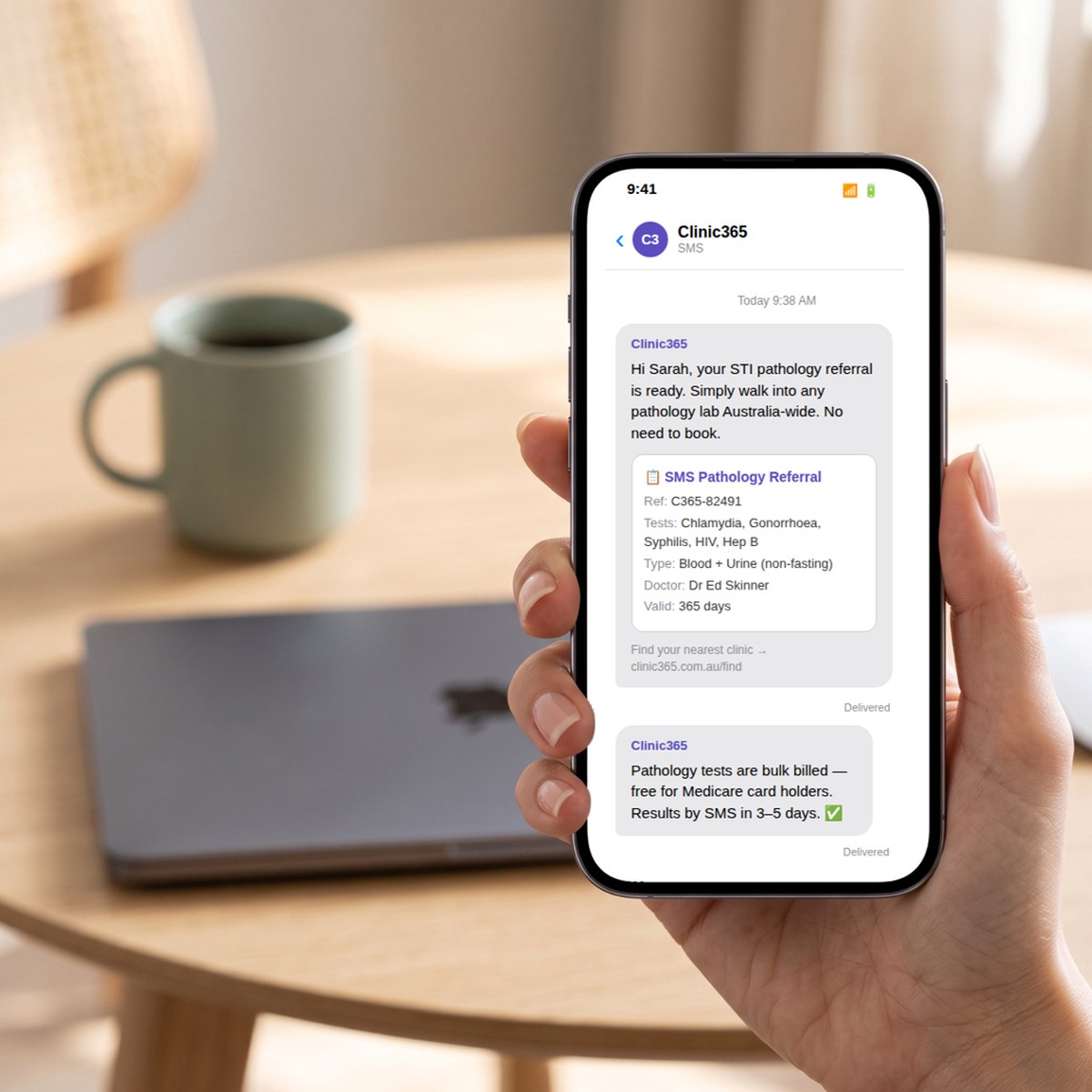
The standard screen covers five infections. A routine screen tests for chlamydia, gonorrhoea, syphilis, HIV, and hepatitis B from one blood test and a urine sample. Optional add-ons: herpes, Mgen, trichomonas, BV, and thrush. If you have had oral or anal sex, add a throat or anal swab — a urine sample alone misses throat and rectal infections.
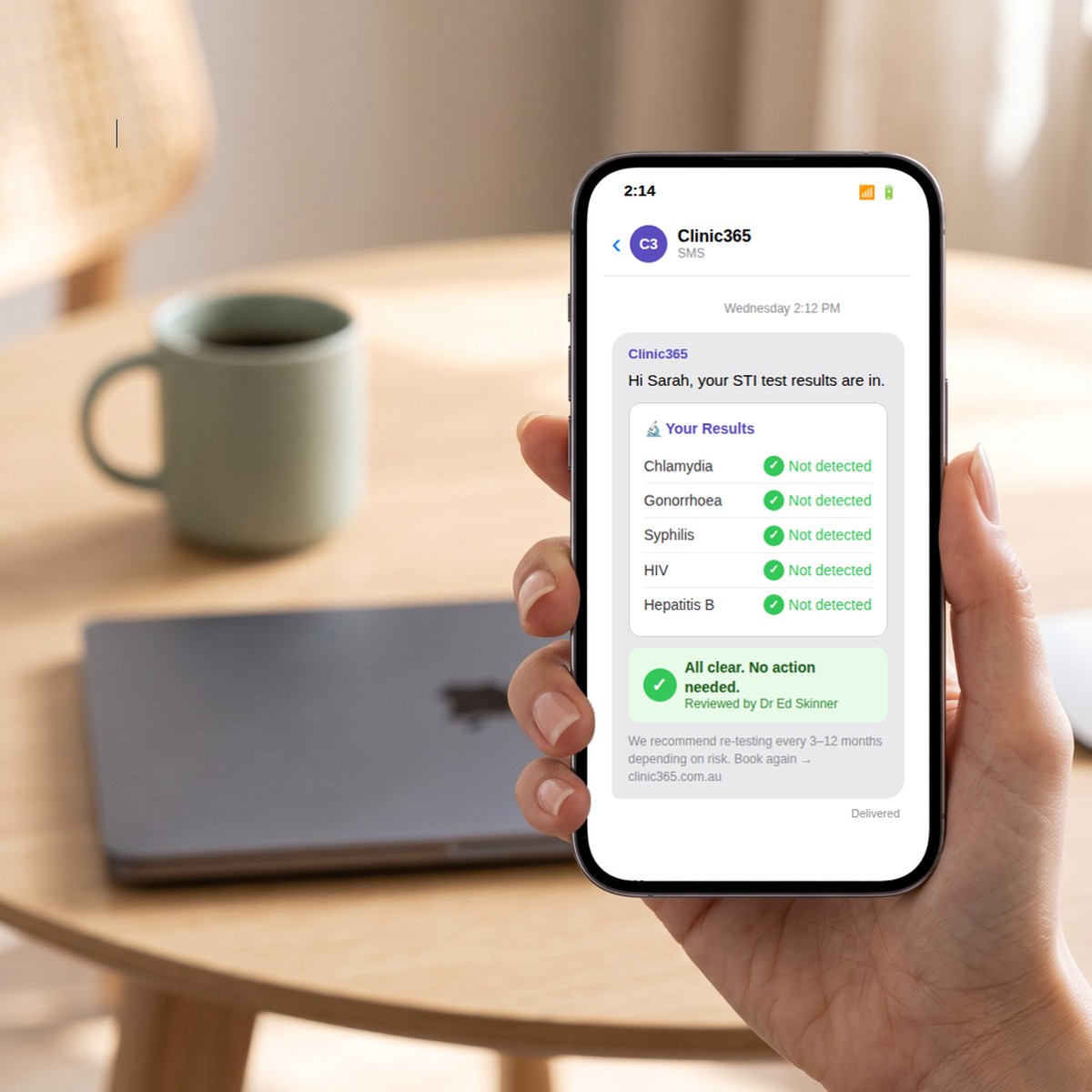
STI test, STD test, or a full sexual health check in Kalgoorlie. Whether you searched for an STI test, an STD test, an STI check, or a sexual health clinic in Kalgoorlie, it is the same straightforward pathway: a Specialist GP arranges the screen, you give your sample at a local collection centre, and results come back by SMS. The referral works across Kalgoorlie-Boulder and across the Goldfields-Esperance region, and anywhere else in regional Western Australia. Kalgoorlie-Boulder is the hub of WA's Goldfields, a long way from the nearest metropolitan sexual health service, so a remote pathway closes the gap.
If a result is positive, treatment is arranged on the call. A Specialist GP calls you to talk it through and arranges treatment. Partner notification is supported via the Let Them Know SMS tool. Chlamydia, gonorrhoea, syphilis, and HIV are reported to WA Health for surveillance; this is handled for you and does not appear on your personal records.
A possible HIV exposure is urgent. HIV post-exposure prevention (PEP) must start within 72 hours of exposure to work. Our Emergency PEP service can arrange same-day treatment and a pathology referral within hours. PrEP and DoxyPEP are available through Australia-wide telehealth for ongoing prevention.
How often should you test? If you are sexually active, a yearly STI screen is a sensible baseline. Test more often — around every three months — if you have new or multiple partners, after a condom breaks, or if a partner tests positive. And test whenever symptoms appear, whatever your last result was.























 STI Prevention
 Learn Hub