A Specialist GP assesses your symptoms over a quick phone call — LGV is a more invasive form of chlamydia that needs a longer antibiotic course, so getting the right diagnosis matters. Testing and treatment can be arranged Australia-wide.
A Specialist GP calls you and sends your pathology request by SMS.
📞 “Hi, it’s Clinic365!”
2
Walk in to any lab
Any pathology collection centre, Australia-wide.
📍 Australia-wide
3
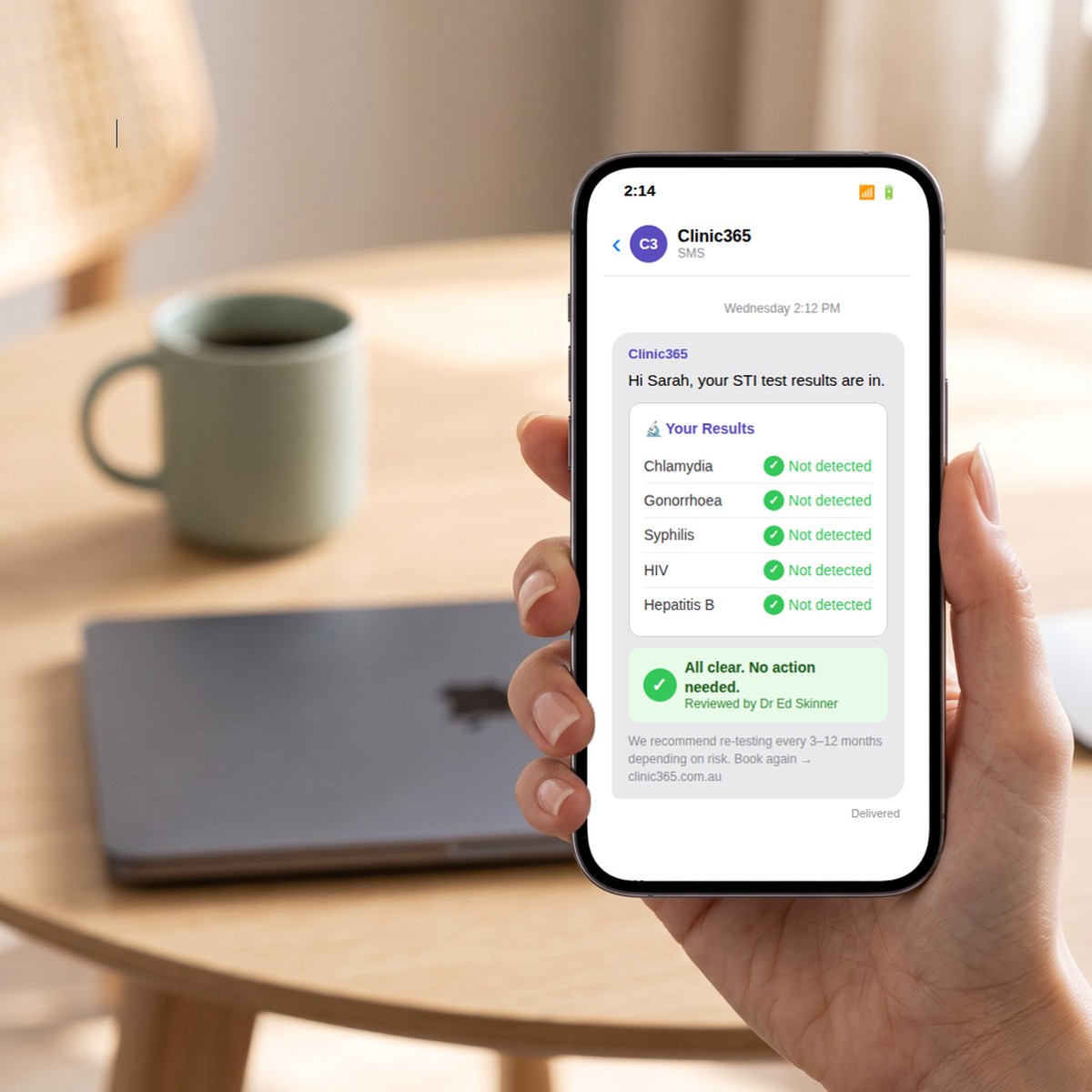
Results by SMS
Usually within 2–3 days. If anything needs treatment, we call you.
✅ “Your results are ready”
🧬 Overview
What Is Lymphogranuloma Venereum (LGV)?
Lymphogranuloma venereum (LGV) is a sexually transmitted infection caused by particular, more aggressive strains of the same bacterium that causes ordinary chlamydia. What sets LGV apart is that these strains are more invasive — they don’t just infect the surface but spread into the lymphatic tissue, which is why LGV can cause deeper, more troublesome problems than a standard chlamydia infection.
Historically, LGV was mainly seen in tropical regions. Over the past couple of decades, though, it has re-emerged in countries like Australia, the UK and across Europe, predominantly among gay and bisexual men, where it most commonly causes rectal symptoms. It’s an infection worth understanding because it’s easy to mistake for something else, and it needs a specific, longer treatment.
LGV and chlamydia — the relationship
LGV is, in effect, a more invasive cousin of chlamydia. Both are caused by the bacterium Chlamydia trachomatis, but LGV is caused by specific sub-types (serovars) that behave more aggressively. This relationship matters in practice for two reasons:
Testing: a standard chlamydia test will often pick up LGV as “chlamydia positive”, but a further test is needed to confirm it’s specifically LGV rather than ordinary chlamydia.
Treatment: LGV needs a longer course of antibiotics than a standard chlamydia infection, so getting the distinction right changes how you’re treated.
In short: LGV is chlamydia’s more invasive form, and it’s treated differently — which is why identifying it correctly is important.
👥 Who It's For
Who Gets LGV?
In current outbreaks in Australia and comparable countries, LGV is seen predominantly among gay, bisexual and other men who have sex with men, particularly those living with HIV. It’s most often transmitted through condomless anal sex. This doesn’t mean others can’t get it, but the resurgence has been concentrated in this group, and it usually presents as a rectal infection. Because of this pattern, LGV is considered particularly when someone in an at-risk group has rectal symptoms or a rectal chlamydia result.
⚠️ Symptoms
LGV Symptoms
LGV symptoms depend on where the infection is and how far it has progressed. Broadly, it causes two main pictures — a rectal infection (the most common presentation now) and a genital infection with lymph node involvement — and it can progress through stages if untreated. As with other STIs, some infections cause few symptoms early on, which is part of why it can be missed.
Rectal LGV (proctitis)
Rectal LGV is the most common form seen today, and it causes proctitis — inflammation of the rectum. Symptoms can include:
Rectal pain
Rectal discharge, which may contain mucus, pus or blood
A feeling of needing to pass a bowel motion even when the bowel is empty (tenesmus)
Bleeding, constipation or a change in bowel habit
Ulcers in the rectum
Rectal LGV can closely mimic inflammatory bowel conditions like Crohn’s disease, and has sometimes been mistaken for them. This is why, in someone who’s sexually active — particularly a man who has sex with men — rectal symptoms like these should prompt STI testing, including for LGV, rather than being assumed to be a bowel condition. Getting the right diagnosis avoids unnecessary investigations and delays.
Genital LGV
The classic genital presentation of LGV happens in stages. First, a small, often painless sore or ulcer may appear on the genitals — this is easily missed and heals on its own. Some weeks later, the lymph nodes in the groin can become swollen, tender and enlarged (sometimes called buboes), and these swellings can be painful and occasionally break down. Because the first sore is painless and short-lived, the swollen groin glands are often the first thing that’s actually noticed. This staged pattern is characteristic of LGV and different from the more surface-level infection of ordinary chlamydia.
Left untreated, LGV can cause lasting damage. Because it invades the lymphatic tissue, ongoing infection can lead to scarring and long-term problems, including scarring and narrowing (strictures) of the rectum, abnormal channels (fistulas) forming between the rectum and other structures, and chronic lymphatic damage and swelling of the genital area. These complications are exactly what prompt treatment prevents — caught and treated early, LGV clears completely and these problems are avoided, which is why rectal or genital symptoms shouldn’t be left unchecked.
💊 Treatment
Diagnosis and Treatment
LGV is diagnosed in two steps. First, a sample from the affected site — commonly a rectal swab, or a swab of a genital sore, and these can often be self-collected — is tested for chlamydia using a sensitive molecular test (NAAT/PCR). If chlamydia is detected in a person at risk of LGV, or with symptoms suggesting it, a further test (genotyping) is done to confirm whether it’s specifically the LGV type rather than ordinary chlamydia. This two-step approach is what distinguishes LGV, and it’s why a “chlamydia positive” rectal result in an at-risk person is followed up rather than simply treated as standard chlamydia.
LGV treatment
LGV is curable, but it needs a longer course of antibiotics than ordinary chlamydia — typically around three weeks, rather than the shorter course used for a standard chlamydia infection. This extended course is important: a short course that would clear ordinary chlamydia isn’t enough to fully treat the more invasive LGV. Complete the full extended course exactly as directed even once symptoms settle; treatment is often started promptly when LGV is strongly suspected, without waiting for the confirmatory typing result; avoid sex until you and your partners have completed treatment and your clinician advises it’s safe; and attend follow-up to confirm the infection has cleared. With the correct extended treatment, LGV resolves fully and the risk of long-term complications is avoided.
Partners and HIV testing
Because LGV is sexually transmitted, recent sexual partners need to be tested and treated, whether or not they have symptoms, to prevent reinfection and onward spread. Partner notification can be handled confidentially and, where preferred, anonymously.
LGV is strongly associated with HIV — a significant proportion of people diagnosed with LGV also have HIV. For this reason, an LGV diagnosis is always a prompt for HIV testing (and testing for other STIs), if not already done. If you don’t have HIV, it’s also a good moment to discuss ongoing prevention such as PrEP.
🛡️ Prevention
Prevention and When to See a Doctor
Preventing LGV follows the same principles as other STIs: condoms reduce the risk during anal and other sex, regular STI testing catches infections early, and prompt treatment of any infection — and of partners — stops it spreading. For those at higher risk, regular sexual health checks that include rectal testing are worthwhile.
See a clinician promptly if you have rectal pain, discharge or bleeding, a genital sore, or swollen groin glands — particularly if you’re in a higher-risk group or a partner has been diagnosed. Don’t assume rectal symptoms are simply a bowel problem; getting tested sorts it out.
Ready when you are. A Specialist GP can arrange everything by phone, with your referral sent straight to your phone by SMS.
LGV is a sexually transmitted infection caused by more aggressive strains of the same bacterium that causes ordinary chlamydia. These strains are more invasive, spreading into the lymphatic tissue and causing deeper problems. Once mainly tropical, LGV has re-emerged in countries like Australia, predominantly among gay and bisexual men, where it most commonly causes rectal symptoms. It’s curable with the right treatment.
Is LGV a type of chlamydia?
Yes — LGV is caused by specific, more aggressive sub-types (serovars) of Chlamydia trachomatis, the bacterium behind ordinary chlamydia. It’s effectively a more invasive form of chlamydia. This matters because a standard chlamydia test often detects it as chlamydia positive, but a further test is needed to confirm it’s LGV, and LGV needs a longer antibiotic course than ordinary chlamydia.
Who gets LGV?
In current outbreaks in Australia and similar countries, LGV is seen predominantly among gay, bisexual and other men who have sex with men, particularly those living with HIV, and is most often transmitted through condomless anal sex, usually causing a rectal infection. Others can get it, but the resurgence has concentrated in this group, so LGV is especially considered with rectal symptoms in at-risk people.
What are the symptoms of LGV?
LGV symptoms depend on the site and stage. The most common form now is rectal — causing pain, discharge (mucus, pus or blood), a feeling of needing to pass a motion (tenesmus), bleeding and constipation. The classic genital form causes a small painless sore followed weeks later by swollen, tender groin glands. Some early infections cause few symptoms, so it can be missed.
What is rectal LGV (proctitis)?
Rectal LGV is the most common form today and causes proctitis — inflammation of the rectum — with pain, discharge that may contain mucus, pus or blood, tenesmus, bleeding and constipation. It can closely mimic inflammatory bowel conditions like Crohn’s disease. In someone sexually active, particularly men who have sex with men, these rectal symptoms should prompt STI testing including for LGV.
What are the symptoms of genital LGV?
Genital LGV happens in stages. First a small, often painless sore appears and heals on its own, so it’s easily missed. Some weeks later the lymph nodes in the groin can become swollen, tender and enlarged (buboes), which can be painful and occasionally break down. Because the first sore is painless and brief, the swollen groin glands are often the first thing noticed.
How is LGV diagnosed?
In two steps. A sample from the affected site (commonly a rectal swab or a swab of a genital sore, often self-collected) is tested for chlamydia using a molecular test (NAAT/PCR). If chlamydia is found in an at-risk or symptomatic person, a further test (genotyping) confirms whether it’s specifically the LGV type rather than ordinary chlamydia. This two-step approach is what distinguishes LGV.
How is LGV treated?
LGV is curable but needs a longer course of antibiotics than ordinary chlamydia — typically around three weeks rather than the shorter course for standard chlamydia. A short course that clears ordinary chlamydia isn’t enough for the more invasive LGV. Complete the full extended course, avoid sex until you and partners have finished treatment, and attend follow-up. Treatment is often started promptly when LGV is suspected.
Is LGV curable?
Yes. With the correct extended course of antibiotics, LGV resolves fully and the risk of long-term complications is avoided. The key is getting the right diagnosis and the longer treatment course, because the shorter course used for ordinary chlamydia isn’t sufficient. Caught and treated early, the outlook is very good.
What happens if LGV is left untreated?
Untreated LGV can cause lasting damage because it invades lymphatic tissue. Ongoing infection can lead to scarring and narrowing (strictures) of the rectum, abnormal channels (fistulas) forming, and chronic lymphatic damage with swelling of the genital area. These complications are exactly what prompt treatment prevents, so rectal or genital symptoms shouldn’t be left unchecked.
Is LGV linked to HIV?
Yes, strongly. A significant proportion of people diagnosed with LGV also have HIV, so an LGV diagnosis is always a prompt for HIV testing and testing for other STIs, if not already done. If you don’t have HIV, it’s also a good moment to discuss ongoing prevention such as PrEP. The two infections are closely associated in current outbreaks.
Do partners need treatment?
Yes. Because LGV is sexually transmitted, recent sexual partners need testing and treatment, whether or not they have symptoms, to prevent reinfection and onward spread. Partner notification can be handled confidentially and, where preferred, anonymously, and a clinic can help you with how to approach it. Treating partners is an essential part of clearing LGV properly.